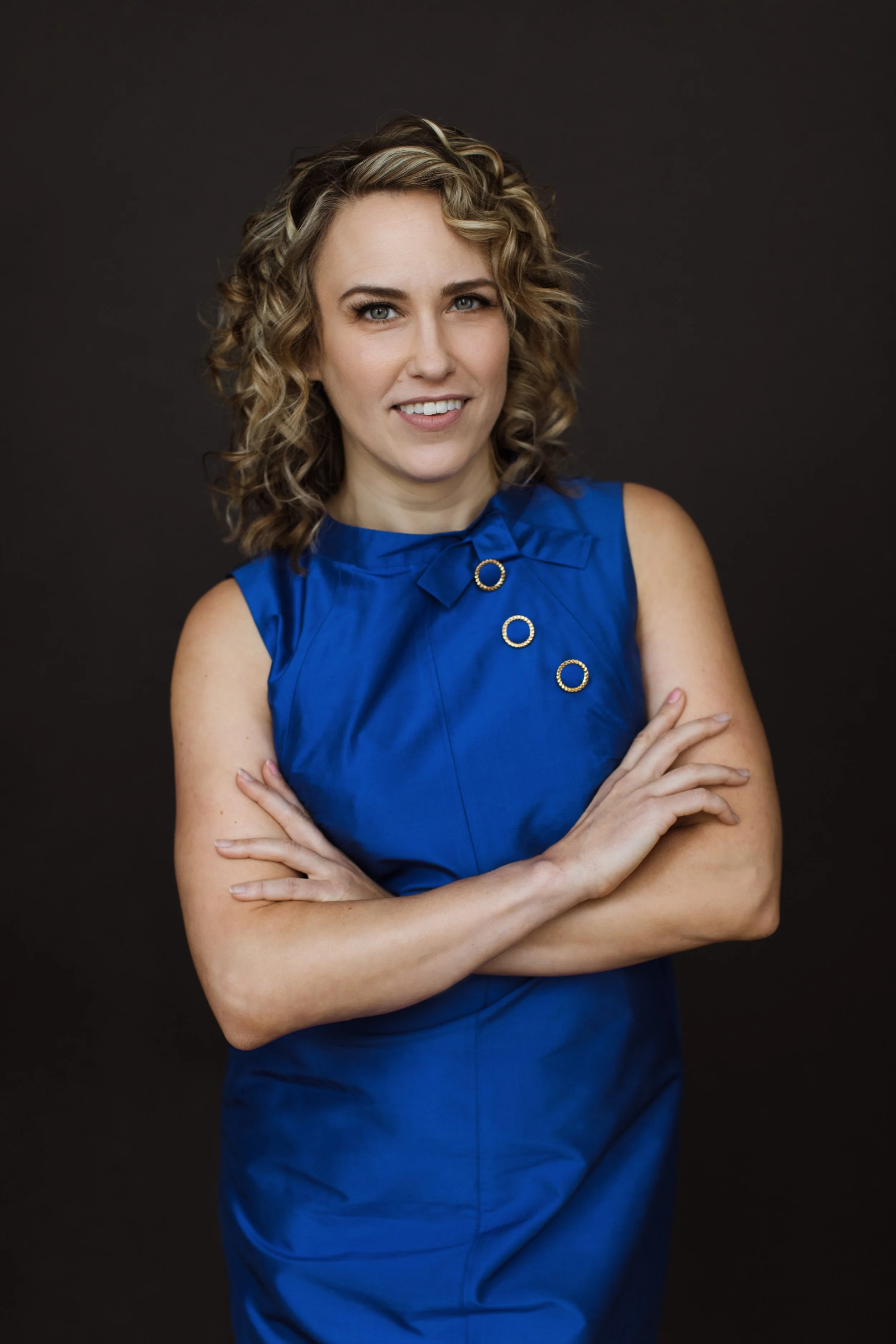
I’m Parker Tracey, a leadership coach, strategist, and educator with over two decades of experience navigating high-stakes environments, from Capitol Hill corridors to Fortune 500 boardrooms.
An ICF Professional Certified Coach (PCC), I studied under Martha Beck and specialize in helping high performers — including professional athletes, elected officials and executives, scientists and military officers — leverage their strengths to thrive in uncertain and demanding circumstances.
My career spans the worlds of public policy, Corporate America, the energy and defense sectors, and elite sport: arenas where performance is visible and consequences are real.


The Story Behind the Strategy
I grew up in suburban Detroit, a tomboy with dreams of playing hockey and spending the off-season excavating dinosaur skeletons.
At age 9, I launched my first tech startup, transforming the family’s dot matrix printer into the backbone of a custom stationery business. Blazing through printer ribbons and fan-folded paper provided an early crash course in asset management and budgeting.
In junior high, I joined forces with my best friend to tap into the global supply chain, reselling items from the Oriental Trading catalog. Decades before online shopping, we were building our import empire at local craft shows. Young hustlers learning the fundamentals of commerce and collaboration (with a touch of showmanship).
That early entrepreneurial spark—fueled by a curiosity to understand how things worked and drawn to people who thought differently—became the foundation for everything that followed.
From Setback to Strength
As a Division I athlete, a life-changing injury forced me to rethink everything. That early setback became my introduction to coaching and leadership. It was no longer about my own performance—I learned how to bring out the best in others. My experience sparked a lifelong dedication to guiding others through uncertainty and celebrating shared victories.
I studied English at the University of Michigan and business administration at Columbia Business School and London Business School. Working on Capitol Hill for the Committee on Resources, my focus on American Indian and Alaska Native issues deepened my interest in energy and environmental policy.
As a congressional staffer and energy lobbyist, I spent 20 years navigating both sides of the policymaking process, honing my skills as a negotiator and advisor. Working across the aisle at the local, state, and federal levels provided insight into the dynamics of influence and decision-making: essential knowledge for bridging divides and driving meaningful outcomes.
Navigating Policy, Industry, & Influence
While most policy professionals remain in their respective capitols, I had the opportunity to see how decisions made by elected officials and corporate leaders played out beyond conference rooms and legislative chambers. At energy facilities and industrial sites, I collaborated with operators whose daily work was directly impacted by the legislation and regulations I helped shape.
Witnessing firsthand how boardroom decisions and legislative mandates translated into on-the-ground outcomes strengthened my ability to connect strategic goals to the practical realities and challenges leaders face every day.
Today, I apply those lessons to help individuals and teams recognize and contextualize their strengths, bridge differences, and turn uncertainty into opportunities for growth and success. With a unique perspective on leadership and influence, I'm known for my ability to navigate complexity.
I care deeply about our next generation of leaders and I’m committed to opening doors to those who have traditionally lacked access. As an executive leadership coach at the University of Michigan’s Ford School of Public Policy, I have the privilege of working with young service-driven professionals tackling the world’s biggest challenges.
Fueling My Fire
Outside of work, you might find me running in a downpour, marveling at an Art Deco building, or embarking on a self-guided bakery and museum tour. While traveling, my inner group fitness instructor taps into a city’s energy by taking a studio class or dropping into an old-school no-frills gym where the soundtrack is the clang of iron plates over retro rock or hip-hop playing from a battered stereo. Always followed by coffee.
I volunteer with organizations that support veterans, children, and adults with disabilities. I never miss a chance to catch live music, spend time outdoors (lately, it’s rowing) or browse a vintage shop—though it’s a bit unsettling to see my high school-era clothes making a comeback on the racks.
I adore big dogs, loose-leaf green tea, and have an enduring fascination with the rural cemetery movement and public works infrastructure (always game to scale a fence or two for a good WPA-era project).
Isaac Asimov’s belief that the cure for anything is salt water—sweat, tears, or the sea—is central to how I live.
What I Believe
Most of my clients think they have a confidence problem, a networking problem, a performance problem.

Usually, they have an information problem: nobody taught them the unwritten rules—of power, of institutions, of how careers actually evolve—so when things don't work out, they assume the problem is them.
It rarely is.
The Hidden Curriculum
Every industry, institution, and organization runs on rules nobody writes down: how decisions really get made, who gets noticed and why, what "ready" actually looks like to the people deciding. That information isn't distributed evenly; it's held by whoever's already standing closest to power.
We focus, understandably, on what's within our control. But it's just as important to understand the broader systems we're operating inside of: the unspoken norms and structures that shape outcomes whether we can see them or not.
Once you recognize the unspoken rules—not the story about your own shortcomings—you can make an informed decision: push forward with a sharper strategy, or take your strengths somewhere they'll be valued differently.
Strengths Hiding in Plain Sight
You routinely underestimate your own strengths. The things that come easily to you (that others value) are often invisible to you. Recognizing your strengths clearly—and in new ways—and learning to translate them into whatever room you're standing in changes what's possible, without requiring you to become someone else.Skills That Compound
Listening. Conflict resolution. Negotiation. Network-building. These aren't “soft skills.” They’re core skills, as crucial as any technical expertise you've built. They sharpen with the same deliberate practice and pay off everywhere, from the boardroom to your closest relationships.
Support, Deliberately Built
No one navigates their biggest challenges alone; not successfully and not for long. A network of community, mentorship, and genuine relationships amplifies your strengths, sharpens your judgment, and opens doors that don't open any other way.
That's also why every top athlete has a coach. So does every high-level executive, performer, and leader I've worked with. No one sees their own blind spots, no matter how self-aware they are.
A coach isn't a luxury. It's an edge.
Growth isn't limited by where you begin. It's driven by your willingness to see clearly, decide deliberately, and act on what you find—regardless of experience, age, or circumstance. I believe in examining both the big picture and the details, planning for the long game, and building the support that gets you there before you need it.